
ABOUT THE INSURRECTION ACT
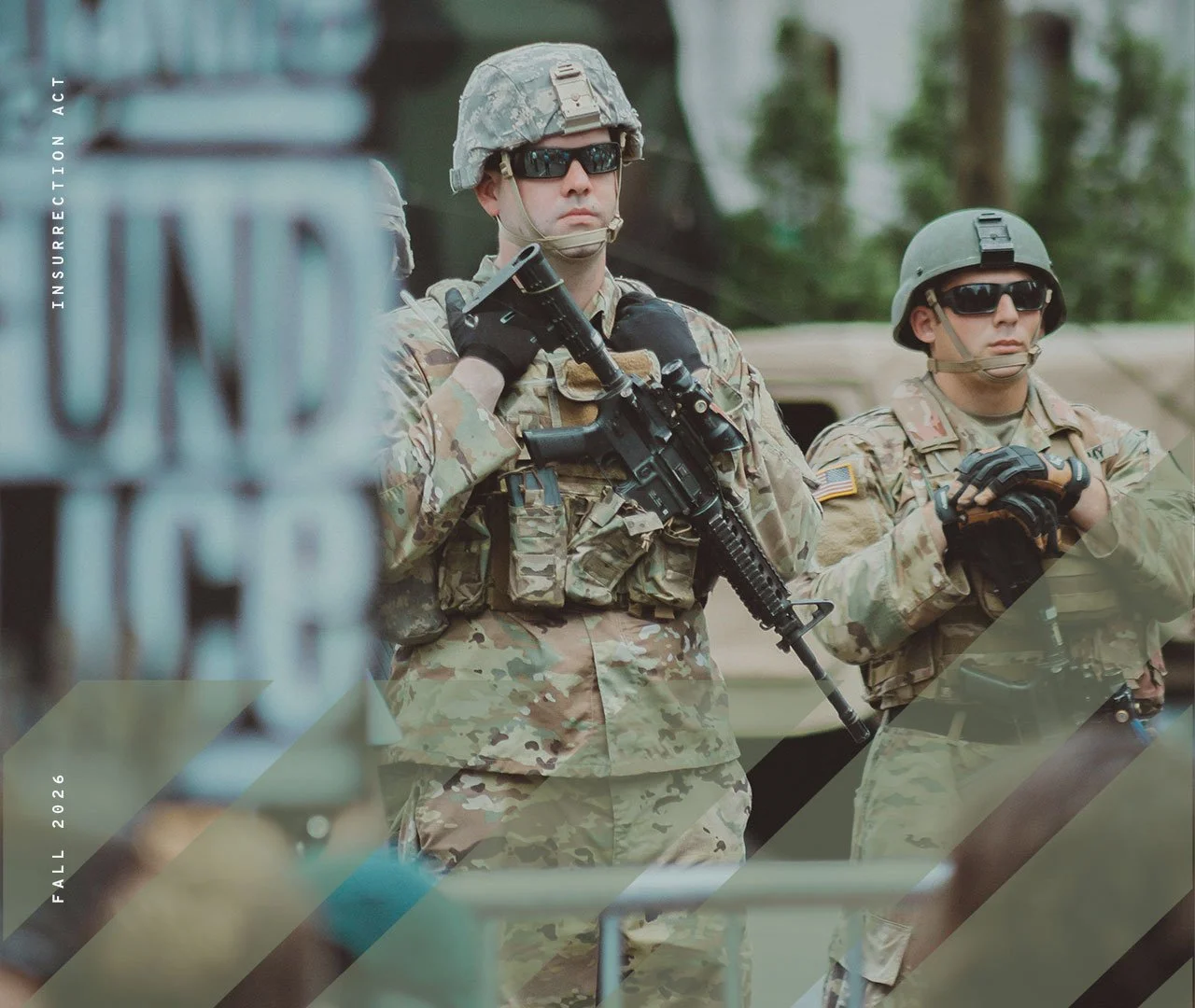
What Is the Insurrection Act?The Insurrection Act is one of the oldest and most powerful tools available to a president. First enacted in 1792 and expanded over the following century, it lets the president deploy U.S. military forces inside the United States to suppress an insurrection, put down domestic violence, or enforce federal law when civilian processes can't get the job done.
Under ordinary circumstances, a separate law called the Posse Comitatus Act keeps the federal military out of domestic policing. That separation reflects a core American principle: the people who defend the country from foreign threats should not be the same people enforcing the law against their fellow citizens. The Insurrection Act is the major exception to that rule. Once invoked, it suspends the Posse Comitatus Act's protections and allows active-duty troops, not just the National Guard, to take part in civilian law enforcement.
How Has It Been Used?The Insurrection Act has been invoked roughly 30 times across American history, and its use has narrowed sharply as the country has matured. Early presidents used it to put down rebellions against the young federal government. Lincoln invoked it at the start of the Civil War. In the 20th century, presidents including Eisenhower, Kennedy, and Johnson invoked it to enforce federal court orders desegregating schools in the South, generally at the request of, or over the objection of, state officials blocking constitutional rights. The last invocation was 1992, in response to civil unrest in Los Angeles, at the request of California's governor.
Why It MattersThe Insurrection Act gives the president enormous power to decide, largely on his own judgment, when a situation justifies putting troops on American streets. The law's terms are vague, and courts have historically given presidents wide latitude to make that call. Sweeping power paired with thin guardrails is exactly what makes this law so dangerous in the wrong hands.
Active-duty troops train for combat, not for de-escalation, evidence-gathering, or the everyday judgment calls civilian policing demands. Putting them in that role raises the risk of violence against the people they're meant to protect, threatens civil liberties, and breaks a tradition that has kept the armed forces out of domestic law enforcement for nearly two centuries. Every time this line gets crossed, even briefly, it gets easier to cross again.
An Apolitical MilitaryThe U.S. military stands outside politics, and keeping it there is foundational to the institution itself. Service members swear an oath to the Constitution, not to a president, a political party, or a cabinet secretary. The Insurrection Act blurs that line, putting troops in a position that risks their standing as an apolitical force and puts the trust between the military and the American people at risk.