
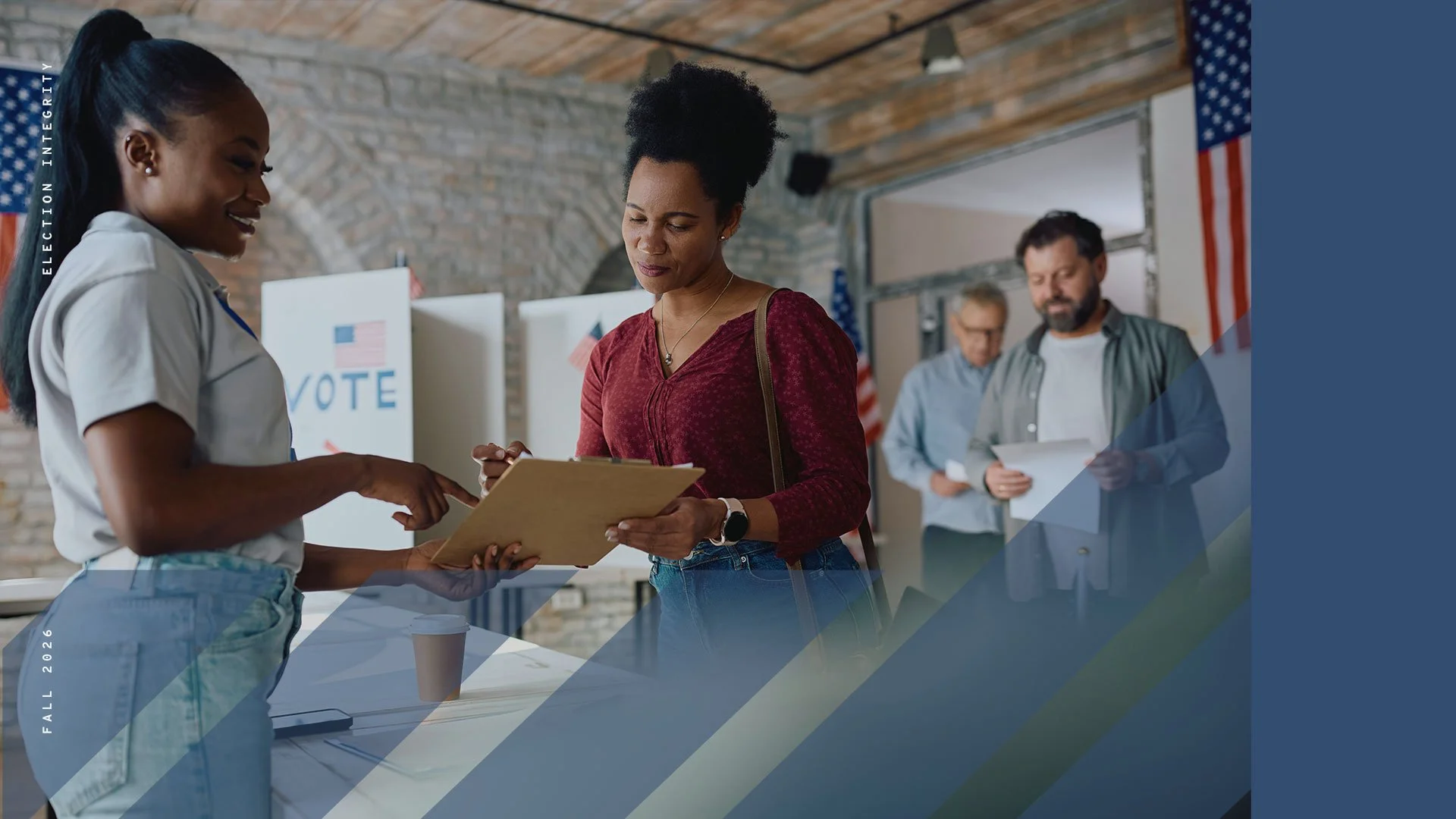
AN ELECTION CHECKLISTWHAT THE VETERAN AND MILITARY FAMILIES COMMUNITY CAN DO
There are practical, nonpartisan actions veterans, military families, and their allies can take leading up to the election to help strengthen public trust, support safe civic participation, and protect the integrity of the democratic process.
INDIVIDUAL ACTIONS☐ Sign onto or circulate petitions among veterans and military families affirming support for free, fair, and secure elections
☐ Reaffirm your oath to the Constitution through Veterans for All Voters Oath Challenge
☐ Visit FVAP.gov if you vote UOCAVA so you can register and request your ballot in one step, allowing you to use the Federal Write-In Absentee Ballot as a backup if the state ballot does not reach you in time
☐ Publish an op-ed or open letter on the importance of military non-interference in elections
☐ Uplift and circulate General Dan Caine decision confirming that the military has no plans to send troops to voting locations for the November midterm elections
☐ Participate in community forums with election officials to build mutual understanding about veteran and military families' communities' needs to vote by mail and how they relate to polling needs of other community members, with an option to sign up to be a part of the Trusted Neighbors initiative.
☐ Volunteer with a local group to support activities that keep elections safe and secure. Examples include: Project HALO, Party at the Polls
☐ Sign up to be a poll worker via Vet the Vote
ORGANIZATIONAL & INSTITUTIONAL ACTIONS☐ Issue public statements from veteran organizations affirming the importance of elections
☐ Issue public statements from veteran organizations affirming the importance of elections without threats or intimidation and the legitimacy of certified election results
☐ Facilitate dialogue between military leadership and civilian election officials to better cater to the needs of veterans and military families
☐ Bring military and veteran voting access concerns directly to lawmakers, pressing for stronger protections for UOCAVA voters
☐ Hold press conferences or public statements urging servicemembers to know their rights regarding lawful orders related to election security or civil unrest
☐ Organize veteran-led vigils or public gatherings at symbolic locations to affirm commitment to democratic norms during contested election periods
☐ Partner with election officials to ensure polling sites on or near military bases are accessible and properly staffed
☐ Encourage military families and veterans to report voting access issues (e.g., absentee ballot problems for deployed servicemembers) to FVAP
☐ Withdraw sponsorship or partnership from organizations found to be spreading election disinformation targeting veterans or military communities
☐ Support litigation or amicus briefs defending servicemembers' voting rights or challenging unlawful restrictions on military/overseas voting
☐ Establish rapid-response hotlines for military families and veterans to report voting access issues (e.g., absentee ballot problems for deployed servicemembers)